(And Why Both Matter — Especially When We Stop Talking About Them)
If you were asked where you’d want to spend your final days, what would you say?
Most people, when asked honestly and without pressure, don’t say “in a hospital.” They say they’d rather be at home — in their own bed, surrounded by familiar light, sounds, smells, and the people they love.
That preference doesn’t mean hospitals are bad. It means humans are wired for comfort, familiarity, and connection — especially at the end of life.
What many people don’t realize until they’re already in it is that the most meaningful care at the end of life isn’t always medical. It’s emotional, relational, and profoundly human.
This is where the distinction between medical care and emotional care becomes so important.
Hospitals Aren’t the Enemy — They’re Just Not the Whole Picture
Let’s be clear: hospitals are not bad.
Hospitals save lives.
They stabilize crises.
They provide technology, expertise, and immediate intervention when it’s needed.
There are moments when a hospital is absolutely the right place to be — after an accident, during a sudden illness, or when aggressive treatment aligns with someone’s goals.
But hospitals are designed for efficiency, urgency, and intervention — not for comfort, reflection, or emotional presence.
That doesn’t make them wrong. It simply means they were built for a different purpose.
At the end of life, when cure is no longer the goal, many people begin to want something different.
What Medical Care Does Well
Medical care focuses on the body. It asks:
- What is happening physiologically?
- What symptoms need to be managed?
- What interventions are available?
- How can we prolong or stabilize life?
This kind of care is essential. Pain management, symptom control, medications, oxygen support — these things matter deeply.
But medical care alone often doesn’t address:
- fear
- grief
- meaning
- peace
- unfinished conversations
- emotional exhaustion
- the need to feel safe and known
And that’s where emotional care comes in.
What Emotional Care Looks Like
Emotional care focuses on the person — not just the diagnosis.
It asks:
- What does comfort mean to you?
- What makes you feel safe?
- Who do you want nearby?
- What are you afraid of?
- What do you need emotionally right now?
Emotional care can look like:
- being listened to without being rushed or dismissed
- sitting in silence with someone who is scared
- honoring routines and preferences
- creating a calm, familiar environment
- allowing space for grief, anger, and love
- helping families feel supported rather than overwhelmed
This kind of care isn’t an optional add-on. It’s central to how people actually experience in their final months, weeks, days, and hours.
When emotional support is present, people often report a greater sense of dignity, meaning, peace, and acceptance.
That’s not a clinical outcome — that’s a human one.
“I Don’t Want a Medical Death — I Want a Human Death”
A physician once said something that stopped me in my tracks:
“I don’t want a medical death. I want a human death.”
That single sentence captures the heart of this conversation.
A “medical death” is often marked by machines, alarms, fluorescent lights, and constant interruptions.
A “human death” is marked by presence, warmth, familiarity, and connection.
Neither is inherently wrong. But most people, when given the choice, lean toward the latter.
Why So Many People Want to Die at Home
Study after study shows that most people say they want to die at home — not in an institutional setting.
Home represents:
- warmth
- familiarity
- autonomy
- dignity
- control over one’s environment
- connection to everyday life
At home:
- routines are known
- pets wander freely
- favorite music can play
- loved ones come and go naturally
- silence feels safe rather than sterile or empty
Home is where people feel like themselves.
That doesn’t mean a home death is always possible — or always the right choice. But the preference itself tells us something important:
People want emotional care just as much as medical care. And often, they want emotional care more.
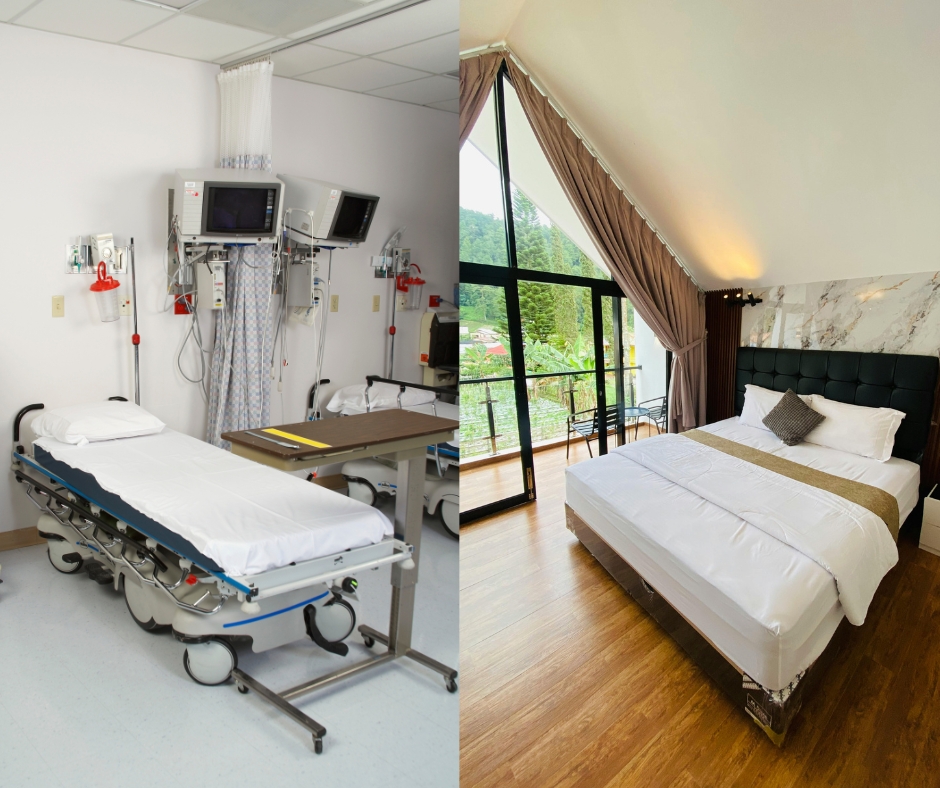
The contrast between a hospital bed and a warm, inviting bedroom says more than words ever could. Neither space is “bad.” They simply serve very different needs.
Sitting With Sadness: Emotional Care in Action
I was recently interviewed and quoted in an article about sitting with sadness — not fixing it, not distracting from it, but simply being present with it.
In that piece, I talked about how talking about death isn’t morbid — it’s freeing. It reconnects people to what matters and gives them permission to live more fully while they’re still here.
This is emotional care in action.
It doesn’t come with charts or medications, but it does come with vulnerability, honesty, presence, and empathy — things medicine often doesn’t have the time or structure to provide, yet people desperately need.
Where Hospice Fits In
Hospice exists at the intersection of medical care and emotional care — but not all hospice experiences are the same.
Hospice can:
- manage pain and symptoms medically
- provide nursing and clinical oversight
- support emotional, spiritual, and psychosocial needs
- allow people to remain at home whenever possible
Some hospice programs excel at symptom management but fall short in emotional presence.
Others offer deep emotional support but don’t clearly explain options or expectations.
This is why families often feel confused or rushed — told “it’s time for hospice” without being given tools to understand what that really means or how to choose well.
That’s one of the reasons I wrote How to Choose the Right Hospice: A Compassionate Guide for Families.
I kept seeing the same things over and over again:
Families didn’t know what questions to ask.
They didn’t realize they had choices.
They didn’t know how to advocate for emotional care — not just medical services.
The book was created to help families understand what hospice truly offers, recognize red flags, ask the right questions, and choose care that aligns with their values.
How Emotional Care Looks in Practice
Emotional care can be simple — yet profound:
- sitting quietly with someone who’s scared
- holding a hand in silence
- asking, “What does a good day look like for you?”
- acknowledging grief without trying to fix it
- letting someone express fear, anger, sadness, or joy
- being a witness to stories that matter
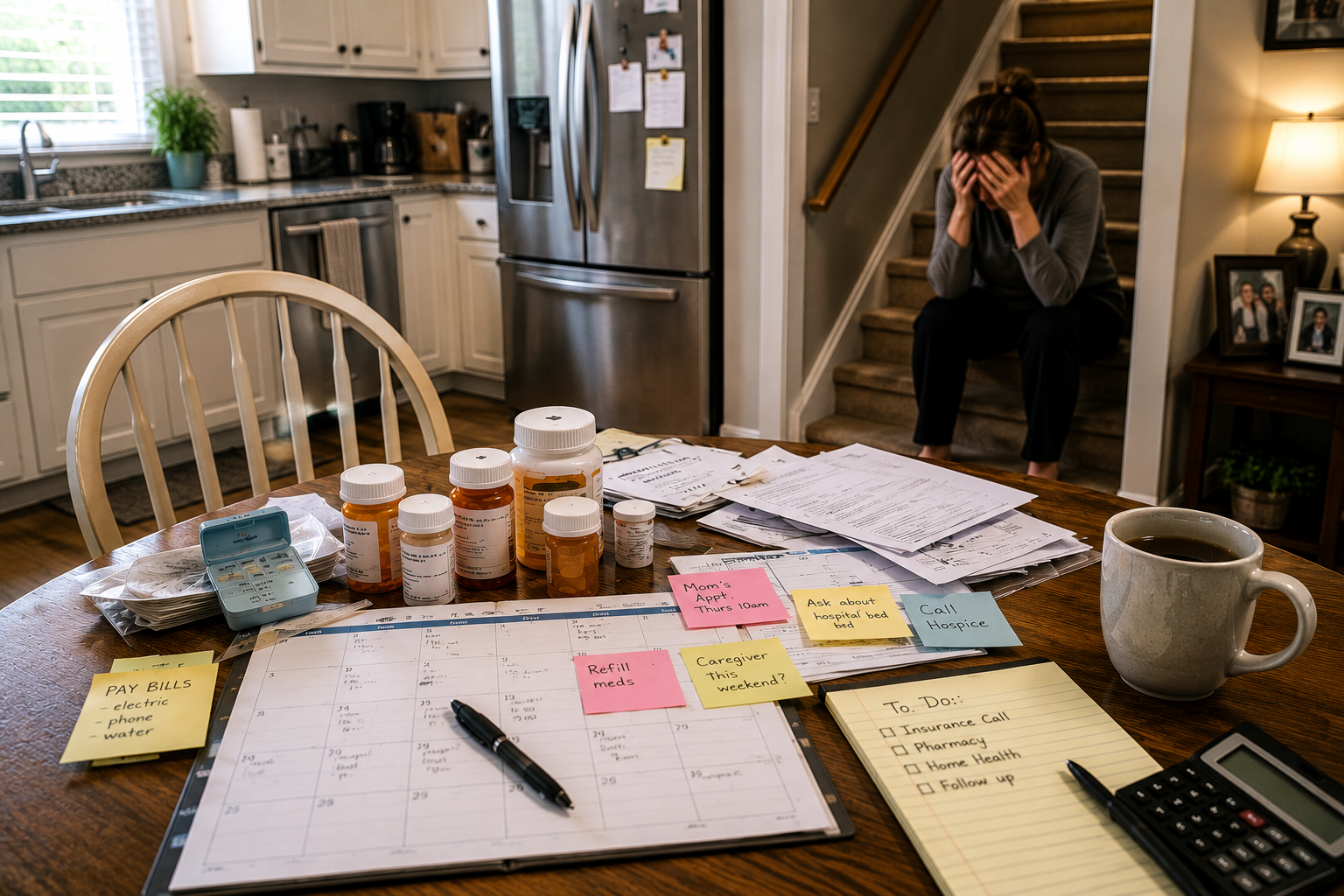
This is the care that creates meaning and memory. And it’s not just for the person who is dying — it’s for caregivers, too.
Why We Need Both — Now More Than Ever
A purely medical death can feel isolating, intimidating, overwhelming, and disorienting.
But when emotional care is intentionally woven in, a person’s final months can become relational, meaningful, embodied, and deeply remembered.
That’s not theory — it’s what families tell me they wish they had focused on sooner.
Emotional Care Is Not an “Extra”
One of the biggest misconceptions is that emotional care is optional — a nice bonus if time allows.
In reality, emotional care is what makes medical care humane.
Without emotional support, families often experience unresolved guilt, fear-driven decisions, lingering trauma, and complicated grief.
With emotional support, families experience clarity, peace, confidence, connection, and a sense of “we did the best we could.”
That difference lasts long after death.
The Role of a Death Doula
As a death doula, my work lives in the emotional space. I help people talk about what they want before a crisis, understand their options, navigate fear and uncertainty, advocate for comfort and dignity, and create an environment that feels human — not medical.
I don’t replace doctors or nurses. I complement them by tending to the parts medicine often doesn’t have time to hold.
A Final Reflection
Hospitals are not the enemy. Medical care is not the problem.
The problem arises when medical care is the only kind of care we consider.
At the end of life, most people want warmth over wires.
Presence over procedures.
Comfort over control.
They want to be human until the very end.
And when we honor both medical and emotional care, we give people exactly that.
If This Resonates
If you’re navigating end-of-life decisions — for yourself or someone you love — you don’t have to do it alone.
My book, How to Choose the Right Hospice, and my work as a death doula are both rooted in the same belief:
Care should feel human. Because emotional care isn’t optional — it’s essential.
If you’d like support, guidance, or simply a place to talk through your questions, I invite you to reach out and see if I can be of help.